

WDR has installed new roofs on Austin construction projects since 2012, working with home builders, general contractors, and homeowners going through custom builds. New construction roofing runs differently from re-roofing an existing home. There’s no tear-off, framing’s fresh, trade coordination matters more than schedule flexibility, and warranty compliance during the build phase directly affects the home’s insurance and resale posture for the next 30 years. If you’re planning a full installing a new roof project as part of construction, this page covers how we approach the work, the material options we install, and what to expect during coordination with your other trades. If you already know you want asphalt shingles, our asphalt shingle page covers the specific product lines we install and the warranty tiers that come with each.
We’re Austin Roofing Company & Water Damage, known as WDR. GAF Master Elite certification (top 2% of GAF contractors nationwide), 1,510+ five-star Google reviews, BBB A+ accreditation, W-2 crews (not day-labor subcontractors), and fully insured with general liability and workers’ comp. Builders working with us get a certificate of insurance on request, W-9 documentation, and clear draw schedules that match construction financing patterns. Homeowners going through custom builds get direct access to our project manager who coordinates with your GC without requiring you to sit in the middle of every technical question.
New construction roofing decisions get made early and locked in for a long time. The roof design, material choice, and ventilation planning baked into your build affect insurance premiums, cooling costs, and roof life for the next 30 to 100 years, depending on the material. We spend real time up front walking through options with builders and homeowners, rather than quoting the cheapest spec that meets code, because the cheapest spec is rarely the right answer for a home someone will live in for 20 years.
What follows covers how new construction roofing differs from re-roofing, the material options we install and when each fits, how we work with builders and other trades, warranty considerations specific to new builds, and inspection points during construction that protect both builder and homeowner.
Why New Construction Roofing Is Different
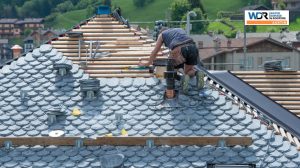 The physical work of installing a roof on new construction overlaps with re-roofing, but the surrounding process runs differently in ways that affect timeline, cost, and quality outcomes.
No tear-off. New construction starts with fresh decking on new framing. That eliminates the entire tear-off phase, which typically consumes Day 1 of a re-roof. On new construction, we’ll start with underlayment as soon as the decking is complete and the deck has been inspected.
Deck condition is predictable. Because the framing is new and the decking is fresh, we don’t run into surprise deck rot, delamination, or fastening issues that force change orders on re-roof projects. Whatever’s specified in the framing plans is what we install onto. That predictability lets us give tighter cost estimates up front.
Trade coordination replaces schedule pressure. On a re-roof, the pressure is usually ‘get the roof back on before the next rain.’ On new construction, the pressure is ‘roof dries in the house so interior trades can start.’ The house needs to be watertight before framing gets exposed to weather, but there’s also downstream coordination with HVAC (roof penetrations for exhaust vents), electrical (mast heads and service entry), and solar prep (if solar is part of the project). We plan around these upstream and downstream requirements at the front of the project rather than adjusting mid-build.
Warranty pathways are stronger. New construction gives access to full manufacturer warranty tiers that a re-roof sometimes can’t qualify for. If the full system (deck, underlayment, shingles, ventilation) is spec’d and installed by a certified installer on a new build, the manufacturer typically covers material AND workmanship for the longest available warranty period.
Material Options for New Construction
New construction is the best window to choose your roofing material because framing can be sized for whatever material you pick. Existing homes limit material options based on what the framing can carry; new construction removes that constraint. Here are the three materials we install most often on Austin new construction, plus when each fits.
Asphalt shingle new construction
Asphalt shingles are the default choice for most Austin new construction, particularly production builds and mid-market custom homes. GAF Timberline HDZ architectural shingles cover about 70% of the new-build asphalt work we do. Fast installation (1 to 3 days on typical residential), lowest cost per square, widest color and profile range, and a 30- to 50-year warranty at the architectural tier. Class 4 impact-rated options are available and worth considering on the western side of the metro where hail exposure is higher. Best-fit new construction: production builder projects, mid-market custom builds, spec homes.
Tile new construction
Tile roofing is the premium choice for architecturally significant custom homes, particularly Spanish revival, Mediterranean, and Tuscan styles that are common in West Austin custom builds. Clay lasts 75 to 100 years; concrete 50 to 75. Requires framing sized for a 6 to 10 pounds per square foot load (vs. 2 to 3 for shingles), which is easy to spec into new construction but expensive to retrofit later. Installation takes 4 to 7 days. Best-fit new construction: custom high-end builds, projects where the aesthetic drives the material choice, homes where the owner is planning 25+ years of occupancy. See our tile roof installation page for the specific tile products we install and the underlayment considerations that determine long-term tile roof life.
Metal new construction
Metal roofing has grown as a new construction choice, particularly for modern architectural styles and homes with visible roof surfaces from the ground. 40 to 70-year lifespan, a Class A fire rating (which matters on the western side of Austin near wildfire exposure), and a clean visual profile that suits contemporary and modern design language. Standing seam is the most installed profile in Austin new construction, with stone-coated steel a growing option for homeowners who want the metal lifespan with a traditional shingle appearance. Our Austin metal roofing page covers the specific systems we install.
Working with Your Builder or GC
About 60% of our new construction work comes through builders and general contractors we’ve worked with repeatedly. The other 40% comes directly from homeowners doing custom builds who bring us in during framing. Either path works. Here’s how each runs.
Builder-direct engagements: your GC or builder has brought us in with the roofing spec already defined in the construction documents. We quote against the spec, contract with the builder, and coordinate our scheduling with the builder’s project manager. Change orders route through the builder. Payment terms’ll typically follow the construction financing draw schedule (progress billing against construction loan disbursements). This is the default for production builds and most mid-market custom builds.
Homeowner-direct engagements: you’re the direct client, and we work alongside your GC or builder as a specialty sub. This is more common on higher-end custom builds where the homeowner wants direct input on roofing decisions rather than filtering everything through the GC. We’ll coordinate scheduling with the GC’s construction timeline but contract with you directly. This lets you have direct conversations with our project manager on material choices, warranty tier selection, and any aesthetic questions.
Either way, we provide the standard builder documentation package: certificate of insurance (general liability + workers’ comp), W-9 for tax reporting, business license verification, GAF Master Elite certification documentation, and BBB accreditation reference. If your builder or lender requires additional documentation for your specific project (bonding, specific insurance limits, subcontractor agreements), we’ll handle those on request.
Roof System Design and Ventilation Planning
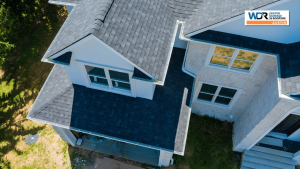 New construction is the right time to get roof system design right, because most decisions bake into framing and can’t be changed later without expensive retrofit.
Ventilation design: an asphalt shingle roof needs balanced intake and exhaust ventilation to hit its rated lifespan. In Austin’s climate, an under-ventilated attic can hit 150 to 160°F on a summer day and cook the shingles from below, cutting effective life by 30 to 40%. Balanced ventilation with soffit intake and ridge exhaust holds attic temperatures 30 to 40°F lower. On new construction, we’ll design the ventilation system into the roof geometry at framing time, which is both cheaper and more effective than retrofitting later.
Roof geometry decisions: hip vs gable, valley count, dormer configuration, and roof pitch all affect roof cost and roof performance. Complex roof geometries look striking but cost significantly more per square foot to install, use more material, and create more potential leak points at every valley and transition. If you’re still finalizing the architectural design, we’re happy to give feedback on which geometry choices meaningfully affect long-term roof performance vs. which are aesthetic-only.
Solar prep: if solar panels are part of your plan (either at construction or added later), the roof design should account for it. Panel-friendly slope and orientation, adequate structural capacity, planned conduit paths, and inverter mounting locations all get easier when you handle them during framing. Retrofitting solar to a roof that wasn’t planned for it costs 40 to 60% more than integrating it during construction.
Coordinating with Other Trades
Roof work on new construction has upstream and downstream trade dependencies. Handling these coordination points up front prevents mid-project surprises.
Framing (upstream): the framing crew has to complete decking, drip edge blocking, and any structural roof elements (ridge beams, hip rafters) before we can start. If framing is running behind, our start pushes back. We ideally coordinate directly with the framing crew’s foreman during the last few days of framing so we can start the day after they finish.
HVAC (concurrent): HVAC exhaust vents penetrate the roof at specific locations determined by the mechanical design. We install boots and flashing for these penetrations as part of the roof installation, so HVAC must finalize the penetration locations before we start. If HVAC changes penetration locations after our work is done, we’ll get called back for change-order flashing work.
Electrical (concurrent): mast heads for the electrical service entry, weather heads for solar readiness conduit, and any roof-mounted equipment mounts all need coordination. Same pattern as HVAC: finalize locations before we install, and we’ll handle the flashing at those penetrations properly the first time.
Interior trades (downstream): drywall, insulation, and interior finish trades can’t start until the house is dried in (watertight to weather). Our schedule directly affects when they can start their work. We treat our dry-in date as a hard commitment because sliding it slides the entire remaining construction timeline.
Warranty Considerations Specific to New Builds
New construction unlocks the highest warranty tiers manufacturers offer, provided the full system gets installed correctly. Missing pieces during the build phase are hard to fix later without voiding warranties.
GAF Golden Pledge warranty: available only through GAF Master Elite contractors installing the full GAF system (Timberline HDZ or higher shingles, GAF underlayment, GAF starter, GAF ridge cap, GAF ventilation components). Non-prorated for 50 years on materials, 25-year workmanship warranty. New construction is the natural time to spec the full system because everything gets installed as an integrated unit rather than added piecemeal later.
Material-specific extended warranties: tile and metal manufacturers offer 50-year to lifetime warranties on their materials when certified installers install them on qualifying systems. Requirements typically include specific underlayment products, specific fastening patterns, and often specific flashing materials. Meeting these requirements during original installation is much easier than trying to retrofit later.
Builder warranty coordination: most Texas home builders provide a 1- to 2-year structural warranty and a 10-year structural warranty through a third-party warranty provider (Home Buyers Warranty, StrucSure, similar). Our roof workmanship warranty stacks on top of the builder warranty, not underneath it. If a roofing issue develops during the builder warranty period, we’ll handle it directly under our workmanship warranty regardless of whether the builder warranty covers it.
Inspection Points During Construction
A proper new construction roof gets inspected at multiple points during the build, not just at the end. These inspection points protect both the builder and the homeowner from defects that would be expensive to remediate later. Homeowners who want a third-party check outside their builder’s normal QC can add a professional inspection from us at any of these points.
Pre-shingle inspection: after underlayment installation, before shingles go on. This catches underlayment gaps, missed penetration flashings, and improper drip edge installation. Once shingles go on, correcting these issues requires removing shingles.
Mid-installation inspection: partway through shingle installation on larger roofs. Confirms proper nail pattern, correct exposure, and course alignment before the whole roof is complete.
Final walkthrough: after all shingle work is complete but before the final construction inspection with the code official. Verifies ridge cap installation, flashing detail at chimneys and sidewalls, and cleanup completeness.
Pre-close inspection: some weeks after installation, before the homeowner takes possession. Confirms that other trades haven’t damaged the roof during their finish work (a common issue on new construction, where HVAC and solar installers sometimes walk on shingles without proper protection). This is the last opportunity to identify workmanship issues while the home is still under builder oversight.
Timeline and Weather Considerations
 New construction roofing timelines depend on the material chosen and the roof geometry. Here’s how we think about scheduling.
Asphalt shingle installations typically take 1 to 3 days on residential projects. Simple gable roofs finish faster; complex hip-and-valley roofs with dormers take longer. On production builds, we’ll often complete tract homes in 1 day per unit if the schedule’s set up properly.
Tile installations run 4 to 7 days on typical residential, sometimes longer on complex geometries. This affects downstream trade scheduling significantly. Builder timelines need to account for this longer window.
Metal installations vary widely. Standing seam on simple geometries can be faster than shingle installation (some jobs finish in 1 to 2 days because there are fewer courses to install). Complex standing seam with dormers and skylights can take 5 to 7 days. Metal panel systems typically run 2 to 4 days.
Weather constraints affect all materials but hit shingles hardest. Modern asphalt shingles need reasonable temperatures (above 40°F) and dry conditions to seal properly. Metal and tile can be installed in wider temperature ranges. Rain during any installation requires stopping and covering the exposed roof. Builders scheduling multiple trades should build in 2 to 3 weather days per week of roof work as a buffer.
What Happens at Close of Construction
The transition from active construction to homeowner occupancy is where a lot of roof problems get discovered later than they should. Here’s how we handle it.
Final walkthrough with the builder: we’ll do a joint walkthrough with the builder’s project manager before the roof gets signed off as complete. This confirms the installation matches spec, catches any punch-list items, and creates a documented completion date that starts the warranty clock.
Documentation package for the homeowner: at close of construction, the homeowner receives the full roof documentation package. Manufacturer warranty registration (submitted by us, confirmed to the homeowner), GAF Golden Pledge documentation if applicable, workmanship warranty from WDR, photo record of the deck condition before installation and the completed roof, spec sheet listing every material used including brand and product line, and contact information for any future service or warranty questions.
One-year follow-up: we’ll contact new construction homeowners at approximately 12 months post-installation to check for any developing issues while manufacturer warranty coverage is at maximum. Most issues on new roofs (if any exist) surface during the first year and are easier to address then than at year 5 or year 10.
Related Services
If your project is a commercial new build with a flat or low-slope roof section, our commercial TPO installation page covers the TPO membrane systems we install on commercial and mixed-use construction.
If you’re planning multiple shingle types across the same project (main house plus outbuildings, or asphalt plus specialty shingle sections), our shingle roof installation services page covers our broader shingle work. To start a new construction project or get a builder quote, call (512) 820-6505 or use the estimate request form.
Frequently Asked Questions
Do you work with home builders and general contractors on new construction?
Yes. About 60% of our new construction volume comes through builder and GC relationships. We provide standard builder documentation (certificate of insurance, W-9, GAF Master Elite verification, BBB accreditation reference), coordinate scheduling with your project manager, and follow construction financing draw schedules for progress billing. If your builder or lender requires additional documentation, we’ll handle it on request.
Can I hire you directly instead of going through my builder?
Yes, on custom builds especially. You contract with us directly and we coordinate our scheduling with your GC’s construction timeline. This is common on higher-end custom builds where you want direct input on material choices, warranty selection, or aesthetic questions rather than filtering everything through the GC.
What material should I pick for new construction?
It depends on your ownership horizon, aesthetic goals, framing plan, and budget. Asphalt shingles are the default for production builds and mid-market customs (30 to 50 year life, lowest cost). Tile is the premium choice for architecturally significant custom homes (75 to 100 years for clay, requires framing sized for 6 to 10 lb/sqft). Metal is the growing choice for modern architectural styles (40 to 70 year life, Class A fire rating). We’re happy to walk through the trade-offs during the design phase.
When during construction should I bring you in?
Ideally during framing planning if you’re still finalizing the roof design. This lets ventilation planning, structural capacity for heavier materials, and solar prep get baked into the framing. If framing is already complete, next best is 2 to 4 weeks before decking completion so we’ll schedule tightly against your framing finish date.
How long does new construction roofing take?
Depends on material and roof complexity. Asphalt shingles: 1 to 3 days on typical residential. Tile: 4 to 7 days. Metal: 1 to 7 days depending on system and geometry. Weather constraints affect all materials; builders should plan 2 to 3 weather days per week of scheduled roof work as buffer.
What warranty do we get on a new construction roof?
The best warranty tier the manufacturer offers, if the full system is properly installed. On asphalt shingle installations, that’s the GAF Golden Pledge (non-prorated for 50 years on materials, 25 years on workmanship), which requires a Master Elite installer and the full GAF system. Tile and metal have their own extended warranty programs with similar full-system installation requirements. Our workmanship warranty stacks on top of the manufacturer warranty and covers installation defects for 10 years.
Are you fully insured for new construction work?
Yes, fully insured with general liability and workers’ comp. Certificate of insurance available on request before contract signing. Our crews are W-2 employees, not day-labor subcontractors, which matters for insurance claim documentation and for consistent workmanship quality. WDR has been in business since 2012 and holds GAF Master Elite certification (top 2% of GAF contractors nationwide) plus BBB A+ accreditation.