
We’re Austin Roofing Company & Water Damage, known as WDR. We hold GAF Master Elite certification (approximately 2% of GAF-certified contractors reach this tier), BBB A+ accreditation, and 1,510+ five-star Google reviews, the largest of any Austin roofing contractor. Our crews are W-2 employees rather than day-labor subcontractors, and we’re fully insured with general liability and workers’ comp. Because tile installations run three to five times longer than shingle installations and require significantly more skill per square, we’re careful about which crews we assign to tile work.
Tile is the right material for Austin homeowners who’re planning 25+ years of ownership, who value the specific aesthetic (Spanish revival, Mediterranean, Tuscan, or modern flat-tile European), or who’re in a neighborhood where tile is the architectural norm. It costs meaningfully more per square than premium asphalt, and the installation takes longer, but a tile roof installed right in Austin’s climate will outlast the homeowner in most cases. This page covers clay vs concrete vs synthetic tile, the shapes and profiles we install, the underlayment considerations that most homeowners don’t hear about until it’s too late, and how the installation process actually runs day by day.
Why Tile Works Well for Austin Homes
Tile has been a Central Texas roofing material for over a century, and there are practical reasons it’s stayed relevant beyond just the look. Tile handles Austin’s specific climate mix in ways that most other materials don’t quite match.
Heat performance is the first advantage. Tile creates a natural air gap between the roof surface and the deck, which lets hot air move rather than transferring straight into the attic. On a 100°F summer day, an attic under tile can run 15 to 20°F cooler than an attic under dark asphalt shingles. That translates to lower cooling costs and less thermal stress on the underlayment and deck over the roof’s life.

Life span is the second advantage, and it’s dramatic. A well-installed clay tile roof in Austin’s climate can last 75 to 100 years. Concrete tile lasts 50 to 75 years. Compare that to premium asphalt at 25 to 40 years and it’s easy to see why tile appeals to homeowners planning long-term. The catch is that the underlayment beneath the tile doesn’t last that long, but we’ll get to that in Section 2.6.
Fire resistance is the third. Tile is Class A fire-rated, the highest classification available. In a wildfire scenario or a lightning strike, tile won’t burn or contribute to fire spread. Given the increasing frequency of Hill Country wildfires on the western side of the metro, this matters more than it used to.
The trade-offs are cost and weight. Tile costs more up front than premium asphalt and requires structural verification that the framing can handle the load. We’ll walk through both in later sections.
Clay, Concrete, or Synthetic Tile
Not all tile is the same material. The three main options each have their own trade-offs on cost, weight, life span, and how they age.
Clay tile
Clay tile is the traditional Mediterranean and Spanish revival material, made from natural clay that’s kiln-fired at high temperatures. It’s the longest-lasting option, with life spans of 75 to 100 years documented in the American Southwest. Clay’s color runs through the full thickness of the tile, so chips or edge wear don’t reveal a different color underneath. Available in the traditional terracotta ranges (natural red, sunset, blended) and increasingly in glazed finishes that let you match specific palettes. The premium option, and the material we install most often on West Austin custom homes and historic renovations. Heavier per square than concrete, requires the most careful framing verification.
Concrete tile
Concrete tile is the workhorse of modern tile roofing. Made from Portland cement mixed with sand and iron oxide colorants, it’s manufactured in shapes that mimic clay tile plus a wider range of profiles including flat tiles that read almost like slate. Life span is 50 to 75 years. Color is applied to the surface during manufacturing, so long-term weathering can reveal the concrete underneath at chip points, though modern products handle this much better than 1990s-era concrete tile. Cost is meaningfully lower than clay for a similar aesthetic. About 60% of the tile roofs we install in Austin today are concrete rather than clay, mostly because the price gap has widened while the aesthetic gap has narrowed.
Synthetic tile (polymer composite)
Synthetic tile is the newer option. Made from polymer composites, often with recycled content, it mimics the look of clay or slate at a fraction of the weight. Life span rated at 50 years. Best-fit projects are structures where the framing can’t handle the load of real tile (older Austin homes weren’t designed for tile in most cases), Class A fire rating is required by insurance, and the aesthetic goal is close enough. Not our most-installed line but we do install it when the situation calls for it, particularly on additions to older homes where the existing framing can’t be economically retrofitted for real tile.
Tile Shapes and Profiles We Install
Within each material type, tiles come in a range of shapes that dramatically change how the finished roof looks. Here are the profiles we install most often in Central Texas.
S-tile (Spanish style)
S-tile, also called Spanish or Mission-style, is the classic curved profile most people picture when they hear ’tile roof.’ Each tile has a distinct S-curve, which creates deep shadow lines and the signature Mediterranean look. Works well on Spanish revival, Mediterranean, and Tuscan architectural styles. This is the profile we install most often in the West Austin custom home market.
Flat tile (interlocking)
Flat tile is the modern European style, low-profile and often interlocking at the edges for tighter water resistance. Reads visually closer to slate than to traditional Spanish tile. Better suited to contemporary and modern architectural styles where the deep shadow lines of S-tile would fight the design language. Growing share of the concrete tile installations we do, particularly on newer custom builds on the west and northwest sides of the metro.
Barrel tile (two-piece)
Barrel tile is a traditional two-piece system with separate pan tiles and cover tiles, alternating across the roof. Historically hand-set, more labor-intensive than S-tile, and produces a distinctly historic appearance that reads as authentic Old World rather than modern reproduction. Rare in Austin but occasionally spec’d on high-end restorations and specific Mediterranean revival projects.
Mission tile (curved pan-and-cover)
Mission tile is similar to barrel but with a specific curve profile associated with California mission architecture. Available in both true two-piece and one-piece designs that mimic the two-piece look. Best on architecturally specific projects where the aesthetic really matters.


How Tile Handles Austin Hail and Storms
Tile’s hail performance is one of the areas where we get the most questions from homeowners weighing tile against premium asphalt. The short answer: tile handles hail better than any shingle option, but it’s not immune, and how a specific tile responds to hail depends on the size of the hail, the impact angle, and whether the tile is properly supported.
Individual tiles can crack or shatter under direct hail impact, particularly on larger hail events (1.5 inch and up). But unlike shingle damage, tile damage is highly localized. Where a hail event might require full replacement of a shingle roof, the same event on a tile roof typically requires replacement of individual damaged tiles while the rest of the roof stays in place. That’s a fundamentally different repair scope, both in cost and in disruption. We handle storm damage repair on tile roofs regularly, particularly after the periodic large-hail events that come through Central Texas.
Wind resistance is the other storm consideration. Modern tile installation uses either mechanical fasteners (screws or nails through pre-drilled holes into batten strips) or an adhesive foam system that bonds tiles to the underlayment. Both approaches, done right, produce wind ratings of 125 mph or higher, which handles anything Austin realistically throws at a roof. The failure mode isn’t wind lifting a properly-fastened tile; it’s a large object (tree limb, wind-driven debris) impacting the tile directly.
For homeowners on the west side of the metro where hail events are more frequent, we recommend keeping a small stock of replacement tiles in the specific color and profile of your installation. This lets any hail-driven repair happen quickly without color-match delays.
The Underlayment Question, and Why It Matters
This is the section that most tile roofing pages skip, and it’s the single most important thing for a tile homeowner to understand. Tile itself lasts 75 to 100 years. The underlayment beneath the tile doesn’t.
The underlayment is the waterproof membrane that sits between the deck and the tile. It’s the actual water barrier on your roof. The tile is the wear surface that protects the underlayment from UV, hail, and physical damage. When the underlayment fails, the roof leaks, even if every tile above it is still in perfect condition.
Standard felt underlayment lasts 20 to 25 years under tile in Austin’s climate. High-performance synthetic underlayments (peel-and-stick modified bitumen products) can push to 30 to 40 years. That means a tile roof that isn’t proactively maintained will typically need an underlayment replacement at some point in its life, which requires removing all the tile, replacing the underlayment, and reinstalling the tile. We can bring the same crew back to do this. It’s disruptive but nothing like a full new roof installation, since the tile stays and just gets reset. If you own a tile roof approaching or past the 20-year mark, a roof condition assessment specifically evaluates the underlayment status and identifies whether an underlayment replacement should be planned in the next 3 to 5 years or is still comfortably out.
For new tile installations, we recommend a high-performance synthetic underlayment as the default, even though it costs more up front than standard felt. The additional 10 to 15 years of underlayment life easily justifies the up-front cost difference over the 50 to 100 year life of the tile itself. We spec this into every tile installation proposal by default and discuss the trade-offs with the homeowner during the quote review.
What Tile Installation Actually Looks Like
A residential tile installation typically takes 4 to 7 working days for a standard 25 to 35 square roof, weather permitting. That’s roughly two to three times longer than a shingle installation of the same size, which is worth planning for both in scheduling and in daily-life impact.
Day 1 covers tear-off if we’re replacing an existing roof. Removing tile is careful, slow work compared to tearing off shingles, especially if any of the existing tile might be salvageable for reuse or spare stock. Then deck inspection, decking repair if needed, and drip edge installation.
Day 2 and Day 3 are underlayment and batten. Peel-and-stick synthetic underlayment goes down first, sealed at all penetrations. Batten strips (horizontal wood strips that the tile hooks onto) get installed with careful spacing based on the specific tile profile. Metal flashing at valleys, chimneys, and skylights gets installed to spec, with attention to how the tile will interface with each flashing detail.
Day 4 through Day 6 or 7 is the tile itself. Tiles get set course by course from the eaves up, each tile fastened per the manufacturer specification (typically two nails or screws per tile at a minimum, more at edges and rakes). Ridge and hip tiles get set with matching profile pieces and mortared or foam-bonded per the specification. Custom-cut tiles at valleys and rakes get done individually.
Final day covers cleanup, magnetic sweep for nails, gutter reinstallation if we removed them, and the final walkthrough with the homeowner. You get a photo record of the deck condition, the underlayment installation, and the completed roof.


Warranty and Long-Term Support
Tile roofs carry three separate warranty considerations, and they don’t all match. Understanding the difference matters when you’re evaluating a tile proposal.
The tile itself carries a manufacturer warranty from the tile producer. For premium clay tile, this is typically 50 years to lifetime on the tile material. For concrete tile, 30 to 50 years is standard. This warranty covers the tile itself against defects like premature color fading, delamination, or structural failure. It doesn’t cover damage from impacts, foot traffic during future service work, or failure of the installation itself.
The underlayment carries a separate manufacturer warranty, usually 20 to 30 years for high-performance synthetic products. The installation workmanship carries whatever warranty your contractor offers. We warranty our tile workmanship for 10 years, which is longer than the shingle-industry standard 5 years, because tile installations that fail typically fail in the first 3 to 5 years from installation errors, and we stand behind our crews’ work. We’ve handled service calls on tile roofs we installed in Tarrytown and West Lake Hills going back a decade, so our records on how these installations perform over time are real, not projected.
Insurance Claims on Tile Roofs
Insurance claims on tile roofs work differently from claims on shingle roofs, and it’s worth understanding the differences before an event happens.
First, tile damage tends to be individual-tile rather than whole-roof. A hail event that would total a shingle roof usually breaks 5 to 50 tiles on a comparable tile roof, which is a targeted repair rather than a replacement. Insurance carriers know this and typically settle tile hail claims as individual-tile replacement plus labor, not as full roof replacement.
Second, tile matching is a real issue on older roofs. If your tile has been in place for 20+ years, the exact color and profile may no longer be manufactured. Some carriers will pay for a partial roof replacement (typically an entire elevation) if a matching tile can’t be sourced, so the elevation appears uniform. Others will accept a close-match tile even if it’s visible to a trained eye. We help homeowners navigate this distinction during the claim.
Third, underlayment failure is typically not covered by insurance. Underlayment fails from age, not from a covered peril. This is why we push new-tile-buyers hard toward high-performance underlayment at installation time and why we recommend underlayment-focused inspections starting at year 20. Planning for underlayment replacement as an eventual maintenance expense, not an insurance-covered surprise, is the right mental model for tile ownership.
Tile Repair, Individual Tiles vs Sections
Because tile damage tends to be localized, most tile service work is targeted repair rather than full replacement. We handle both individual tile replacement (a hail event broke 8 tiles on the south elevation) and section-level work (a tree fell across the northeast slope, damaging 40 tiles and cracking the underlayment beneath). Our targeted roof repairs page covers repair work across all roof types; here’s what’s specific to tile.
Individual tile replacement requires accessing the damaged tile without breaking adjacent tiles, unhooking it from the batten, replacing it with a matching tile, and re-securing. It’s careful work but not complex. The critical constraint is matching, which is why we recommend homeowners keep a small stock of the exact tile used in their installation. If we did your installation, we probably still have your tile spec on file.
Section repair happens when a larger area is damaged. We remove and stack tiles in the affected zone, inspect and repair or replace underlayment as needed, and reinstall. If original-color tile isn’t available, we sometimes source tiles from a less-visible elevation and use new tiles in the less-visible spot to preserve the visual continuity of the main elevation.
What Affects Tile Roof Installation Cost
Tile pricing depends on several drivers, and it’s worth understanding them so you can compare quotes on a like-for-like basis.
The tile material is the biggest variable. Concrete tile costs meaningfully less per square than clay. Within concrete, plain-color tiles cost less than blended or through-color premium options. Within clay, standard terracotta costs less than glazed or specialty finishes. Synthetic tile falls between concrete and premium concrete on cost.
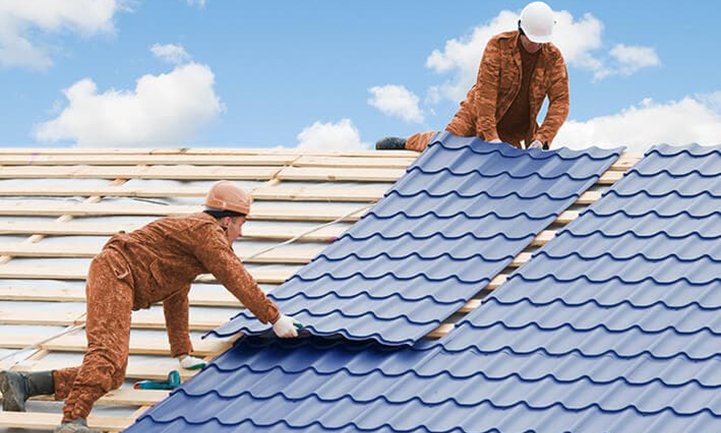
Roof complexity is the second driver, and it matters more for tile than for shingles. Every valley, rake, and penetration on a tile roof requires custom-cut tiles and careful flashing integration. A simple gable roof runs a fraction of what a complex hip-and-valley roof with multiple dormers costs.
Framing modifications, if needed, are the third. Tile weighs 6 to 10 pounds per square foot depending on the specific product, compared to 2 to 3 pounds for asphalt shingles. Some older Austin homes need framing reinforcement to accept tile. We evaluate this at the on-site inspection and include any needed reinforcement in the proposal so there aren’t surprises during construction.
Underlayment specification is the fourth. High-performance synthetic underlayment costs more up front than standard felt but adds meaningful life to the roof system.

Getting Started and Related Services
The first step is a free on-site inspection. Because tile installation is more complex than shingle installation, our tile proposals include more detail than a shingle proposal would, covering the tile spec, underlayment spec, batten system, flashing details, framing analysis if needed, and the specific crew we’d assign to the project. We typically book tile installations 3 to 6 weeks out during high season because we’re careful about which crews handle tile work.
If you’re comparing tile against other premium materials, take a look at our standing seam metal page for the metal alternative that competes at a similar life-span tier.
If tile turns out to be more roof than your project needs, our GAF asphalt shingles page walks through the premium asphalt options that hit a lower price point with a shorter life span. Call (512) 820-6505 or use the estimate request form to schedule your free tile roofing inspection.