by Brad | Feb 22, 2023 | Austin
Even in a state as distinct and unusual as Texas, Austin stands out as an exciting destination because of the overwhelming range of activities. Austin is known for its excellent cuisine, fantastic live music venues, and general weirdness. The city’s excellent culture and welcoming residents are to thank for the city’s quick rise in popularity as a place to live and visit.
Reasons Why People Move to Austin
What draws people to Austin, Texas? Learn more about a few of the many reasons why people love this city so much:
One of the main attractions of Austin is the accessibility of well-paying employment. The city is a growing center for well-known tech corporations and tech startups.
With a booming economy, many small and established firms, and a lively startup scene, Austin can pay its citizens an average weekly wage 10% higher than the national average.
Austin’s economy is in such good shape that it consistently receives recognition as one of the best in the country for startups, women entrepreneurs, and young business owners.
Although high living expenses often accompany high salaries, Austin allows you to make a respectable living without spending it all on rent and food.
One of the main factors motivating so many people to move to Austin from other major cities like San Diego, California, is the possibility of finding a lower cost of living alongside skilled positions.
Austin’s prices are not among the most affordable in the country. If you’re from a more rural area, prices may seem high, with a median property price of just over $400,000.
The relatively low prices compared to other big cities, combined with the high median income, draw people to Austin’s working environment.
Another crucial component of any move is finding attractive, safe housing. Because everyone can choose a neighborhood in Austin that fits their needs, tastes, and budget, the city draws new residents.
You can find your ideal house in the city of Austin, whether in the thriving downtown area, in the middle of the region, or the mesmerizing countryside of West Austin.
Furthermore, the city receives praise for being the best place to raise a family, one of the best places for millennials to live, and one of the best places to retire, thanks to its varied population and wide range of housing options.
The weather in Austin is lovely for three seasons out of the year. Austin winters often feature highs in the 60s and 70s, while spring and fall bring comfortable highs in the 80s, far from winter’s bitter cold and snow.
Austin has an outdoor culture because of the consistently good weather, which makes some of its residents the healthiest in the nation. The city has 250 gyms, 220 parks, 30 swimming holes, many lakes, and a variety of walking and hiking paths.
Employment and entertainment may attract individuals to Austin, but the genuine Texas friendliness surrounding the city typically keeps them there. You can enjoy a chat with the cashiers and customers when running your errands.
Furthermore, you can find friends, support, and a sense of belonging quickly in the Austin community. This friendliness and kindness make this constantly expanding city seem like a cozy small town.
Essentially, there are many benefits when choosing Austin to be your home. Whether you decide to move here or travel for work, you will probably fall in love with its beautiful weather, lovely people, and incredible culture.
There is no better place for you or your child’s education than the Austin metro area. According to Expansion Management Magazine, four of the public school districts in the region have been recognized as the best in the country. Similarly, 14 Austin high schools were named the best in the country by U.S. News & World Report.
In Austin, you can always find a place to go to at night—whether you want to drink a terrific cocktail, go somewhere casual to cheer on your favorite sports team or go to a club to dance the night away.
While West 6th Street may be known for its wild places, South Congress is home to many hip pubs and restaurants with creative bartenders brewing incredible drinks.
Austin’s Tex-Mex cuisine, complete with all the queso and tacos one could want, would be enough to persuade people to relocate there, but the city’s culinary scene is far more diverse than that.
The mouthwatering choices include the famous Franklin Barbecue and SaltLick BBQ. Austin’s food truck scene is another popular attraction.
IT professionals planning to move to Austin soon may be lucky because the city’s IT scene is booming. Companies like Facebook, Google, Dell, BigCommerce, and others have their headquarters there.
Don’t Blame the Coronavirus Pandemic
Even though some people panicked and bought properties, the coronavirus pandemic had little to do with Austin’s booming real estate market.
Austin has been expanding for many years and still is. Furthermore, Austin has recently established itself as a center for the tech industry, spurring the current rapid growth.
Up Next: Where Does Austin Get its Water? Everything You Should Know About the City’s Water Source!
Is Austin Walkable?
It depends on where you live. Although you can walk to South Congress, downtown Austin, and parts of East Austin, getting to other neighborhoods throughout the city still requires a car or uber. The bus system is the only form of public transportation in the city.
What Are You Waiting for?
Every age and lifestyle can find something to enjoy in Austin. There are several things to do there, and a rich history and culture. Austin is a terrific place to live because of the affordable living, lovely neighborhoods, excellent weather, outdoor activity, and exciting events all year.
Sponsored By:
As you explore what Austin has to offer, from its vibrant culture to its enticing cuisine, don’t overlook the essentials that make living here comfortable and secure. One such element is the roof over your head, which safeguards your home. Austin Roofing Company & Water Damage | WDR is an expert Austin roofer that offers comprehensive roofing services to ensure your roof is in excellent shape. Our team of experts will examine your roof, identifying any issues and providing clear solutions. As you take in the delights of Austin, let us offer you the peace of mind that comes with a secure, well-built roof.

by Brad | Feb 22, 2023 | Austin
Austin’s water source is immensely relevant with numerous residents, many tourists, severe weather problems, and potential climate change consequences to prevent. Whether you plan to stay there long-term or just visit, you should know about it!
Some Facts about Austin, Texas
Austin is the capital of Texas, and nearly 1 million people live there. With desperately hot temperatures and 300 days of sun per year, its residents need to stay hydrated!
In 1983, the city’s government started implementing robust water conservation systems. The community’s primary value is environmental stewardship, so changes constantly happen to maintain affordable rates while keeping up with daily demand.
Where Does It Get its Water?
All the drinking water in Austin comes from the Texas Colorado River, which you can see if you’re in the city.
Although authorities have devised numerous solutions and strategies, Austin must resist drought. Therefore, government identities are constantly implementing new methods to avoid severe issues.
A historic eight-year drought marked the city forever since people needed emergency resources.
Climate change and severe weather have also impacted Austin. Nowadays, drought and flood patterns have changed.
At the same time, Austin has had a quick population drought, so government authorities have had to take measures fast due to that as well.
Austin’s Plan for the Future
Experts estimate that Austin will have nearly 2,000,000 residents by 2040. Thus, Austin now has a 100-year water resource plan that came up, called the Water Forward Plan.
Austin’s community and experts devised different strategies to handle things transformatively, be more creative, prevent issues, and tackle them if they’re inevitable. The plan includes the following six elements:
- There must be private and public involvement of all stakeholders.
- Experts must rely on local water supplies like the Texas Colorado River.
- People must analyze water issues on site and explore the possibility of reuse strategies.
- Programs have to be focused on efficiency and conservation, always.
- Experts must rely on a climate science approach.
- There must always be performance metrics.
The Water Forward plan also considers localized infrastructure as one of its primary factors. Lastly, if authorities and the community implement this plan, everyone will enjoy some benefits, for example:
- People will be able to access water sources more efficiently and quickly.
- The city will be more resilient and able to handle problematic situations.
- Austin will have more strategies against drought and climate change.
Bodies of Water in Austin That People Often Visit
Now, you know where Austin’s water comes from and how the city’s community and authorities will handle potential issues.
However, if you’re visiting or living there, you may want to enjoy the fun parts of natural water sources nearby. There are a few places people often visit, so take a look!
Town Lake
Currently called Lady Bird Lake, this Austin reservoir was created in 1960. With a 416-acre surface, nowadays, it serves as a recreational center to control floods.
Most motorized watercraft are prohibited in Lady Bird Lake. Therefore, people often go there to have fun in canoes, kayaks, rowing shells, and dragon boats.
Moreover, several universities practice water sports there, such as the University of Chicago, Oklahoma, Wisconsin, Texas, and Nebraska.
Remember that you’re not allowed to swim at the Town Lake. Even so, numerous events and music festivals happen there all year round, so visiting is always a fun idea.
Barton Springs Pool
If you’re looking for a fantastic outdoor swimming pool to have fun at, Barton Springs may be for you. It takes water from Main Barton Springs and is within Barton Creek!
The Barton Springs pool is one of Texas’s most famous natural water bodies and the fourth largest.
Don’t get sad about being unable to swim at the Town Lake. Head over to Barton Springs because you can have fun there anytime during the year!
Highland Lakes
The lower Colorado River has formed a series of dams, and they’re called ‘The Highland Lakes.’
Some of the city’s biggest lakes are part of the water reservoir for this region, such as Travis and Buchanan.
The primary purpose of the Highland Lakes is to provide hydroelectric power for the city and manage floods. However, since they’re famous, many people visit them!
Read more: The Best Five Hospitals in Austin, Texas, and Why They Rule All Lists
The Mary Quinland Park
You’ll find Mary Quinland Park on the upper reaches of Lake Austin. If you like boat ramps, you can have fun at any time of the day!
Mary Quinland Park is famous for its numerous options to enjoy your time during your visit. People go there to have fun with boat ramps, barbecues, picnics, or at the basketball court.
However, remember there’s no drinking water, so if you’re going, bring your own!
The Deep Eddy Pool
Deep Eddy may be the ideal place to visit if you’re looking for a combination of men’s work and natural resources.
Initially, it was a swimming pool in the Colorado River. Then, it was a resort in the 1920s, and nowadays, it’s a popular place to visit in Austin!
There is a place for both adults and children at Deep Eddy today. Old and young swimmers can go and have fun, and it’s open during daylight hours every day of the year. In wintertime, hours are short.
Final Thoughts
The Texas Colorado River is the source that brings water to all people in Austin. Since it’s the state’s capital and is home to many people, the community and government authorities have devised a 100-year plan to prevent issues and deal with floods and drought.
If you’re visiting or living in Austin and want to have fun at one of the famous natural water bodies, you can go to the Deep Eddy Pool, Mary Quinland Park, Barton Springs, Highland Lakes, and the Town Lake!
Presented By:
Understanding where Austin gets its water is important, but it’s equally crucial to protect your home from water’s damaging effects, particularly on your roof. Austin Roofing Company & Water Damage | WDR is the best roofing company in Austin that offers specialized roof services to address and mitigate water damage, ensuring your home remains safe and comfortable. Our skilled team can identify and fix any water-related issues, prolonging the lifespan of your roof and maintaining the value of your property. As you dive deeper into the intricacies of Austin’s water sources, remember to secure your home’s defenses with our expert roof repair services.

by Brad | Feb 21, 2023 | Roofing Tips

by Brad | Feb 21, 2023 | Roofing Tips

by Brad | Feb 21, 2023 | Roofing Tips
The following hail damage roof inspection checklist can assist Texas residents in evaluating the state of their roof and taking the required steps to speed up repairs in the case of a severe storm.
Austin Roofing Company & Water Damage | WDR is aware of the psychological and financial strain that extreme weather disasters cause. If your property has suffered storm damage, we suggest you contact your local roofing contractor to arrange a free roof inspection to assess how well your roof is holding up and if you should contact your insurance adjuster.
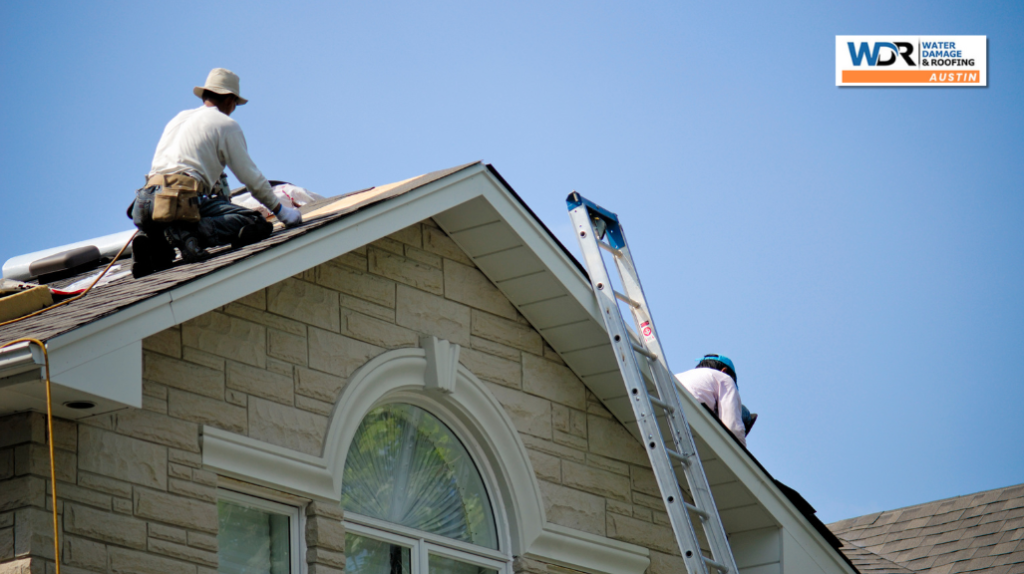
We will be able to provide a thorough visual inspection photo report explaining all damage or issues detected during the inspection. Our qualified project manager will accurately determine the necessary repairs to restore your property to its original condition.
Make sure you arrange an inspection with a professional roofing contractor as soon as possible if you notice any of these problems. These signs of damage can vary in difficulty for the untrained eye to see, with others requiring an expert’s eye.
How Do You Inspect a Roof for Damage?
Downspouts, Gutters, and Gutter Screens
Look at your gutters, downspouts, and gutter screens from the ground with an eye for any dents. In situations where the hail severely damages the roof, it is common for the gutters to sustain at least some impact damage. Keep an eye out because dents can vary in size.
Sliding and Windowsills
Next, examine the siding and window sills or casings. Again, if the roof has been seriously damaged, these areas of your home will probably have some damage.
Be sure to pay close attention to any exposed metal, such as the metal fascia on your roof eaves, while you inspect these home components from the ground. Every ding, no matter how small, can suggest the roof was probably damaged.
Air Conditioner and Outdoor Items
Your air conditioners or other devices outside your home are among the few things you can see damage from the ground.
Once again, if the hail storm was solid and big enough to harm your air conditioner or other items, it was probably also strong enough to cause damage to your roof. If you notice the hail damage immediately, you can file an insurance claim with your insurance company for the air conditioner.
Outdoor Painted Surfaces
Last but not least, inspect the entire surfaces outdoors, especially those painted or treated in some way. Paint that has chipped may have been damaged by hail, but it may also mean something else.
Identifying Hail Damage to Asphalt Shingles
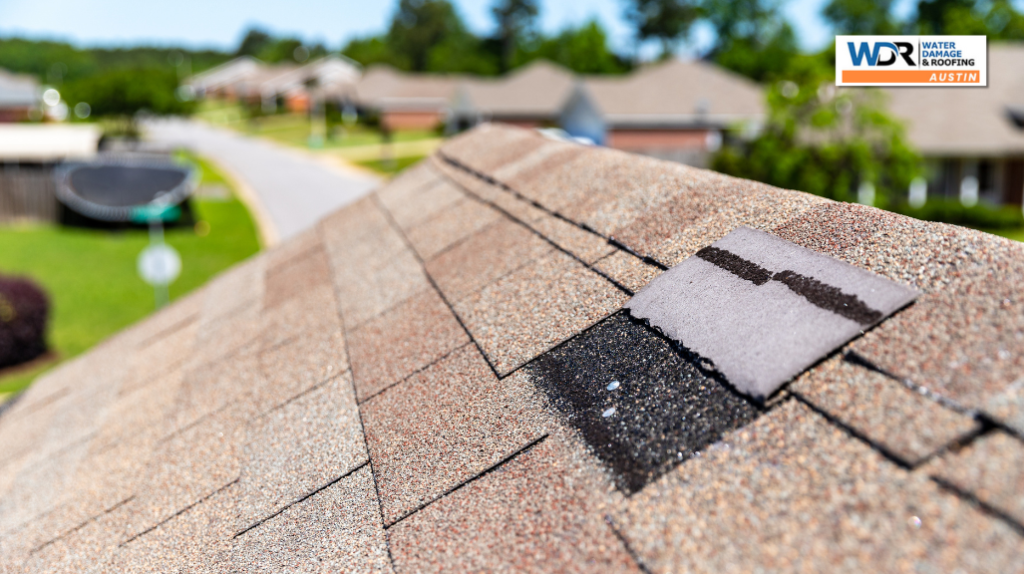
The roof’s shingles will be the most crucial aspect of any roof damage inspection. Although it varies depending on the damage and your policy, you have a far better chance of filing an insurance claim with most insurance companies if the shingles are damaged.
Unfortunately for those without experience, some hail damage to shingles is apparent, but that is not always true. You might need to get pretty close to the shingles to see the damage.
Surface Granules
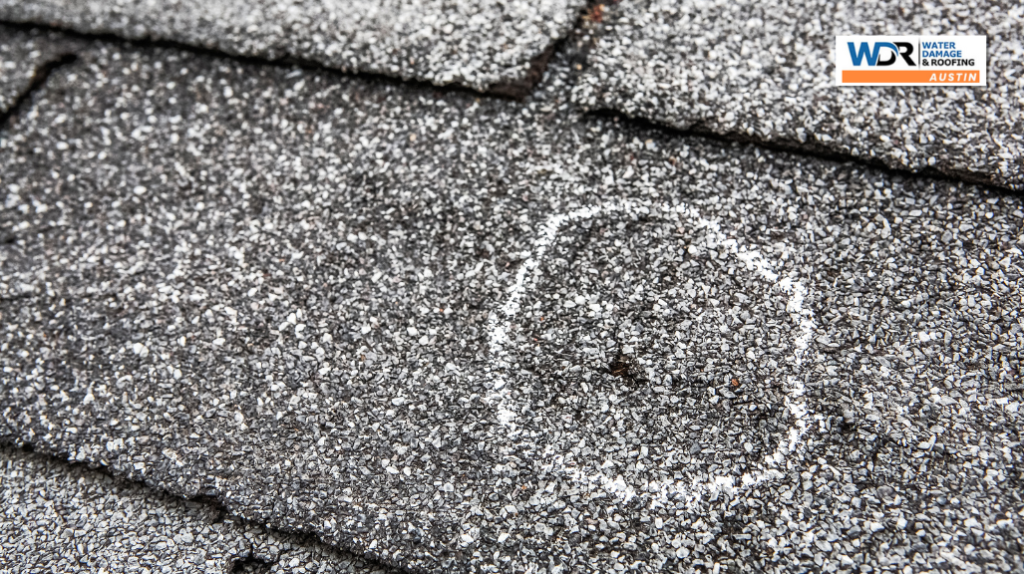
As you examine the shingles, look at the surface granules. Some of these are going to get damaged by hail. The shingles’ integrity was likely compromised if your roof was exposed to high force. Furthermore, missing shingles might also cause leaks later on.
How to Spot Storm Damage on Roof Vents, Chimney Covers, and Other Rooftop Elements
Roof vents and other features, such as skylights, should be checked for damage if you inspect your roof or have a contractor check the building for damage. Dings, dents, and chipped surfaces are all possible indications of damage.
Compared to chimney covers, the damage is typically easier to see on soft metal vents. In the latter scenario, you might need to run chalk across the surface sideways to identify hail damage.
Hail Damage on Metal Roofs
Shingles are among the most common roof materials, especially for homes, but they are not the only ones. Hail damage on metal roofs is most likely to show up as dents. Luckily, this makes it easy to repair the sustained damage.
Hail Damage on Shake Roofs
If a hailstone strikes a wooden shingle, it will split in half. This also makes the damage very obvious.
Hail Damage on Clay or Slate Roofs
If your roof is slate or clay, it probably has dents or cracks from the hail and severe storms.
Is a Hail Storm Likely to Cause Roof Damage?
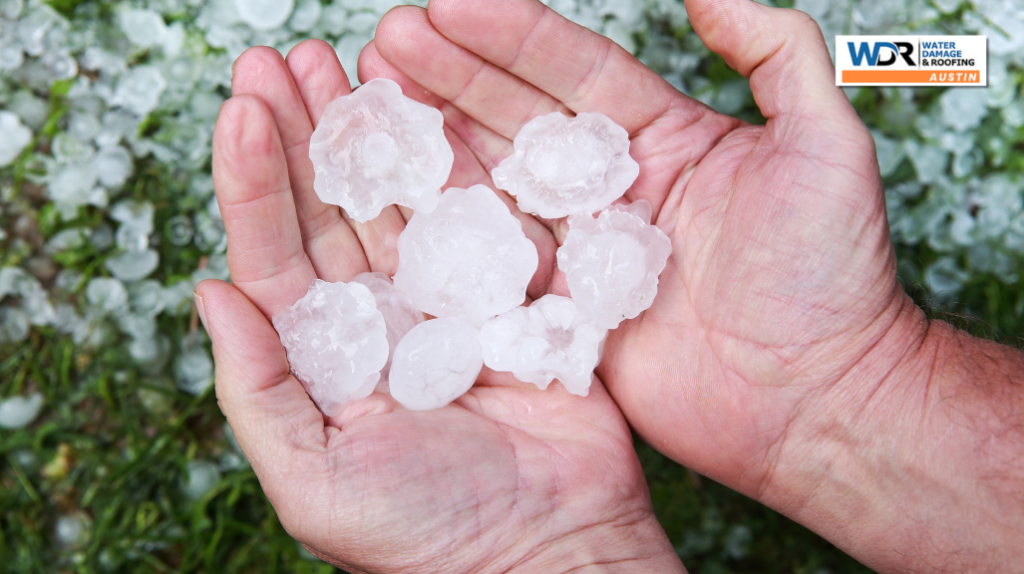
Many aspects can influence whether hail will harm your roof and its supporting structures. Generally, at least 1 inch in diameter hail will harm your asphalt shingles.
The hail may have to be slightly larger to damage your roofing. For example, concrete tiles and cement tiles usually need hail that is at least one ¼ inch in size to cause any damage to the roof.

How Do Insurance Adjusters Measure Hail Damage on a Roof?
Before you file a claim with your insurance company, you’ll need to take photos and videos of the damage to your roof. Meeting with your public adjuster may also be a good idea because they may help you find a contractor, negotiate prices, and manage your insurance.
Should I Claim Hail Damage on My Roof?
Having pictures of your property before it was damaged is an intelligent thing to do. These images will show how your property, including vehicles and other outdoor assets, looked before the storm damage. Such photographic evidence will make it more difficult for your insurance company to reject your claim.
Some insurance providers may have a minimum threshold for hail damage before accepting a claim for roof damage. An insurance provider might need a set amount of hits within a specific area. If the damage to the roof requires repairs or replacement, you should also get estimates.
However, if your insurance provider approves your claim, you should be aware that the payout will depend on the extent of the wind damage, the type of roofing you have, and your insurance coverage.
Do You Have Roof Damage Caused By Hail Storms?
Call an expert roofing professional immediately if you believe hail storms have damaged your roof. You can save money, time, and stress by quickly fixing these problems. You will receive expert guidance as you proceed with the roof hail repair process.
Are you ready to move forward with fixing your roof? Request a free estimate with your professional roofing company!