

 Most Austin homeowners have never watched a roof get replaced. When you’re spending call for a free estimate on a project, knowing what’s supposed to happen and when gives you confidence that the job is being done right. This is a realistic, step-by-step walkthrough of what a full roof replacement with WDR looks like, from preparation through the end-of-day walkthrough.
Before installation day, a few preparation steps make the process smoother:
- Move vehicles from the driveway and at least 10 feet from the home’s perimeter
- Relocate potted plants, outdoor furniture, and fragile items away from the structure
- Inform immediate neighbors that work will be happening, roofing is loud
- Secure or move pets indoors, our crews will be moving around the property all day
- Remove wall art and anything fragile from shelves on interior walls, vibration from the tear-off can dislodge items
For homes with detached garages, pool equipment, or deck spaces adjacent to the structure, extra clearing is worth the effort.
For a free estimate in Austin, call (512) 820-6505 or request a free estimate.
Installation Day: A Complete Walkthrough
7:00 – 8:00 AM: Arrival and Setup
The crew arrives at your home and the first priority is protecting what is around your house, not the roof itself. Tarps go down over landscaping beds, air conditioning units, and any hardscape within ten feet of the structure. Ladders are staged at the primary access points, and scaffolding is set up on any face where the pitch or height requires it. Rolling scaffolding protects both the crew and your property. Material delivery typically arrives by 7:30 AM or was staged the prior afternoon. Once protection is in place and materials are on-site, tear-off begins.
8:00 – 10:00 AM: Tear-Off
The crew strips all existing roofing material down to bare decking. On a standard shingle roof this means removing shingles, underlayment, and ridge cap in sequence. Tile removal is slower and requires more careful handling. All material goes directly into a dump trailer at the driveway or curb, with a crew member staged below to manage debris flow and keep fasteners and shingle fragments from scattering across the yard. A clean tear-off site is both safer for the crew and easier to clear at end of day.
10:00 – 11:30 AM: Decking Inspection and Repair
After tear-off, the decking is fully exposed. We inspect every sheet of plywood or OSB for:
- Soft spots indicating moisture damage or rot
- Delamination or structural compromise
- Improper fastening from prior installations
- Previous water stains indicating historic leaks
Any compromised sections are replaced before anything goes on top. We’ll walk you through any additional decking replacement before proceeding so there are no surprises on the final invoice.
Any compromised sections are replaced before the underlayment goes down. The cost of decking replacement is communicated to you before we proceed, no surprises on the final invoice.
11:30 AM – 1:00 PM: Underlayment Installation
With clean, inspected decking, underlayment installation begins. Synthetic underlayment goes down over the entire deck surface, it is stapled or nailed at the top edge and laps with each successive course. Ice-and-water shield, a self-adhering rubberized asphalt membrane, goes down first at eaves (typically the first three feet), at all valley intersections, and around every penetration. This membrane self-seals around fasteners and bonds to the deck, creating a waterproof secondary barrier. This is the layer that prevents water from reaching your interior if any primary roofing material is ever compromised. It is not optional, and the quality of its installation, overlap dimensions, penetration integration, determines how well it performs.
1:00 – 4:30 PM: Shingle or Material Installation
Installation begins at the eave with starter course shingles, a factory-sealant product that bonds to the first field shingle course and prevents wind uplift at the roof edge. Field shingles follow in a staggered pattern with each course offset to prevent vertical seam alignment. Nail placement follows the manufacturer-specified nail line on the shingle face, nailing outside that zone reduces wind resistance and can void the warranty. Inspectors verify nail line compliance on permitted jobs, and our crews are trained to maintain it consistently. As installation approaches each penetration, the pace slows for correct flashing integration in the proper sequence.
4:30 – 5:30 PM: Ridge Cap and Final Details
Ridge cap shingles are the last roofing material to go down and the most exposed, they sit at the highest point of the roof where wind uplift is greatest, which is why correct nailing and adhesive sealing matters. Hip caps run the full length of each hip from ridge to eave. Both ridge and hip caps are hand-sealed with roofing cement at termination points.
Drip edge is verified at eaves and rakes. At eaves, drip edge should have gone down before underlayment; at rakes, after underlayment. This sequencing matters for how water sheds off the edge during heavy rain.
Final cleanup begins with the entire crew clearing the site: rolling magnets sweep the yard, driveway, garden beds, and any grass areas adjacent to the structure. Gutters are cleared of granules and shingle debris. The dump trailer exits the property.
End of Day: Walkthrough
Before the crew leaves, our project lead walks the completed roof with you. This walkthrough is not a formality, it is the moment to look at ridge caps, hip caps, all flashing points, and any penetrations together. If anything looks different from what was discussed, or if you have any question about what you’re seeing, raise it before payment is processed and before the crew disperses. We photograph the completed installation from multiple angles and log any decking that was replaced during the job. You receive the final invoice, warranty paperwork, and manufacturer warranty registration information at this point.
Multi-Day Projects
Several project types extend beyond a single day and require specific planning. Tile installations are the most labor-intensive, tile removal is slower than shingle tear-off, and tile laying requires more precision and drying time at mortar joints. Homes over 3,500 square feet of roof surface (not floor plan) with multiple ridge lines, dormers, and complex valleys typically require two days even with a full crew. Standing seam metal installations almost always span two days due to the precision required at seam formation and flashing integration. When your project requires multiple days, we cover all exposed decking with reinforced tarps each evening before the crew leaves, secured at eaves and rakes to protect against overnight weather. You will receive a specific schedule before work begins.
After Installation: What to Expect
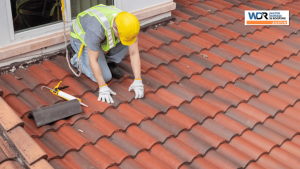 Roof replacement comes with both a manufacturer’s material warranty and a WDR workmanship warranty. We provide documentation for both.
Schedule a free post-installation inspection one year after installation, we’ll verify flashing performance and check for any settling issues before the manufacturer warranty period begins to matter.
WDR completes roof replacements throughout Austin and the metro, Lakeway roofing, Dripping Springs, Georgetown, Leander, and all surrounding communities. Call (512) 820-6505 for a free estimate.
City of Austin Development Services, The City of Austin Development Services department handles roofing permits and coordinates inspections for qualifying residential replacements.
What Good Cleanup Looks Like
Cleanup is the part of a roof replacement that homeowners remember most, and it’s where you learn the most about a contractor’s standards. A professional job ends with the site in better condition than the crew found it.
Rolling magnetic sweeps cover the yard, driveway, garden beds, and any access paths. These heavy tools pull steel nails and staples out of grass and gravel before they cause problems with tires or bare feet. A single pass is a minimum, WDR crews make two.
Gutters get cleared of debris from the tear-off. This matters because old granules and shingle fragments will clog gutters if left in place, and the first significant rain event will flush them into your downspouts.
All old roofing material leaves the property the same day on every standard project. Some contractors stage debris for pickup the next day; WDR hauls the dump trailer off-site at the end of the job. Your driveway is clear when we leave.
The project lead photographs the completed roof before leaving. These photos document the finished installation and serve as your baseline record for any future warranty claims or insurance documentation.
After Installation: Your First Year
 The first year after a new roof installation is worth paying attention to, not because problems are likely, but because early detection of any issue, however rare, is far easier and cheaper to address than deferred discovery.
Schedule a free follow-up inspection 10 to 12 months after installation. WDR offers this as a standard service. We’ll verify that flashings are seated correctly after their first full heat cycle, check that pipe boots haven’t shifted, and confirm that ridge and hip cap sealant is intact heading into a second storm season.
Keep your warranty paperwork accessible. For GAF Golden Pledge and other enhanced warranties, register the warranty on the manufacturer’s website within the required window, typically 45 to 60 days after installation. WDR provides the documentation you need to complete registration.
Report any concerns promptly. If you notice a stain, a soft spot, or anything that looks out of place in the first 12 months, call us before investigating on your own. Rooftop access after installation carries the same fall risks it did before, let us handle the inspection.
Frequently Asked Questions
How long does roof replacement take in Austin TX?
Most residential replacements complete in one day. Larger homes, tile roofs, or complex rooflines may take two to three days. WDR provides a specific timeline with every estimate.
What time will the crew arrive on installation day?
WDR crews typically arrive between 7:00 and 8:00 AM on installation day.
Will I need to be home during the roof replacement?
You don’t have to be home the entire day, but we recommend being available for the end-of-day walkthrough to review the completed work.
What happens if it rains on my installation day?
WDR monitors weather and won’t begin a job that can’t be safely completed before rain arrives. If unexpected rain develops mid-job, we protect the exposed decking before stopping.
How long before I can walk on the new roof?
New asphalt shingles are walkable immediately after installation. Tile and metal have specific handling requirements we’ll review with you.
What do I do with the year after installation?
WDR recommends a free inspection one year after installation to verify flashing performance and check for any issues before manufacturer warranty periods begin.