
Is Roof Replacement a Capital Expense? Understanding the Tax Treatment
Roof replacement represents a significant investment for homeowners and businesses, and understanding its tax treatment is essential for financial planning. Whether roof replacement qualifies as a capital expense depends on several factors, including property type (residential vs. commercial/rental), the nature of the work, and current tax regulations.
Quick Answer
For residential homeowners: Roof replacement on your primary residence is generally NOT deductible and doesn’t qualify as a capital expense for immediate tax benefits. However, it may increase your home’s cost basis, potentially reducing capital gains tax when you sell.
For rental properties and businesses: Roof replacement typically qualifies as a capital improvement that must be depreciated over time rather than deducted immediately, though tax treatment can vary based on specific circumstances.
Important: This guide provides general information only. Always consult with a qualified tax professional or CPA for advice specific to your situation.
Understanding Capital Expenses vs. Repairs
The IRS distinguishes between repairs (deductible immediately) and capital improvements (depreciated over time):
Repairs (Expense Immediately)
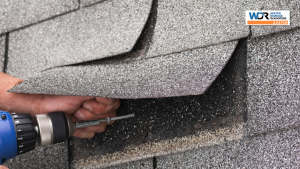
Repairs restore property to its previous condition without adding value or extending life significantly.
Examples of roof repairs:
- Replacing a few damaged shingles
- Fixing a leak
- Repairing flashing
- Replacing a small section damaged by a storm
- Patching holes or damaged areas
These maintain your property in working order but don’t substantially improve it.
Capital Improvements (Depreciate Over Time)
Capital improvements add value, prolong useful life, or adapt property to new uses.
Examples of capital improvements:
- Complete roof replacement
- Upgrading to higher-quality roofing materials
- Adding solar panels during reroofing
- Significant roof structural modifications
- Replacing the entire roof system
Complete roof replacement typically qualifies as a capital improvement because it:
- Substantially extends roof life (20-50+ years depending on material)
- Often adds property value
- Represents a major investment
- Replaces the entire system rather than just repairing damage
Residential Homeowners (Primary Residence)
For your primary residence, roof replacement generally:

Is NOT Immediately Tax Deductible:
- Home improvement costs on primary residences aren’t deductible (with some exceptions, like energy-efficient upgrades under specific programs)
- You cannot deduct roof replacement costs from your income in the year incurred
- This applies whether you pay cash, finance, or use insurance proceeds
May Increase Your Home’s Cost Basis:
- Your home’s cost basis is the purchase price plus the cost of capital improvements
- A higher cost basis reduces capital gains when you sell
- This only matters if you have capital gains exceeding the primary residence exemption ($250,000 single, $500,000 married filing jointly)
Example:
- Purchase price: $300,000
- Roof replacement: $15,000
- New cost basis: $315,000
- If you sell for $400,000, the taxable gain is $85,000 instead of $100,000
- But if the gain is under the exemption anyway, this doesn’t matter
Exception – Insurance Reimbursement:
- Insurance proceeds for storm damage aren’t taxable income
- You don’t deduct the expense, OR count insurance payment as income
Rental Properties
For residential rental properties, roof replacement treatment depends on circumstances:
Safe Harbor for Small Taxpayers
If you qualify for safe harbor treatment (gross receipts under $10 million):
- You MAY be able to deduct roof replacement immediately if it falls under de minimis safe harbor or the routine maintenance safe harbor
- Thresholds change, so verify current limits
- This is a significant tax benefit when available
Capital Improvement (Most Common)
More commonly, complete roof replacement is capitalized and depreciated:
- Depreciation period: 27.5 years for residential rental property
- Example: $20,000 roof replacement = $727 annual depreciation ($20,000 ÷ 27.5 years)
- Depreciation is deducted each year, reducing taxable rental income
Partial Replacement vs. Full Replacement
Partial replacement (less than 40% of the roof) might qualify as a repair and be immediately deductible.
Full replacement is almost always capitalized and depreciated.
Commercial Properties
For commercial buildings, roof replacement is typically a capital improvement:
Depreciation Period: 39 years for commercial property (longer than residential)
Section 179 & Bonus Depreciation: Under certain conditions, roofing may qualify for accelerated depreciation:
- Section 179 allows immediate expensing of qualifying property (limits apply)
- Bonus depreciation may allow a first-year deduction of a substantial portion
- Qualified improvement property may receive favorable treatment
- Rules change frequently—consult a tax professional
Factors Affecting Tax Treatment
Several factors influence whether roof work is a repair or a capital improvement:
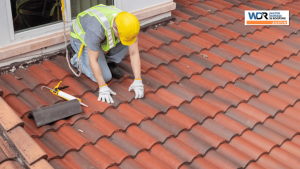
Scope of Work:
- Replacing entire roof → Capital improvement
- Repairing small sections → Repair expense
- Gray area: partial replacement of significant portions
Property Type:
- Primary residence → Not deductible (but increases basis)
- Rental property → Capitalized and depreciated
- Commercial property → Capitalized and depreciated
- Business building → May qualify for accelerated depreciation
Timing:
- Work on completing a prior plan may have a different treatment
- Emergency repairs may differ from planned replacement
Improvement vs. Restoration:
- Simply replacing the old roof with an equivalent → Typically capitalized
- Upgrading to substantially better materials → Clearly a capital improvement
- Restoring to original condition after neglect → May be a capital improvement
Record Keeping for Roof Replacement
Regardless of tax treatment, maintain thorough records:
Documentation Needed:
- Detailed invoice/contract showing the scope of work
- Proof of payment (cancelled checks, credit card statements)
- Before and after photos
- Material specifications
- Insurance correspondence (if applicable)
- Professional assessment reports
Why Records Matter:
- Prove the cost basis when selling property
- Support depreciation deductions
- Document insurance claims
- Defend tax positions if audited
Keep records for at least:
- Primary residence: Until 3 years after selling the home
- Rental/commercial: Until 7 years after the property is sold plus depreciation recapture period
Insurance Considerations
Insurance Proceeds for Storm Damage:
- Not taxable income
- Replacement cost not deductible (you’re being reimbursed)
- If insurance doesn’t cover the full cost, the out-of-pocket amount follows regular treatment
Energy-Efficient Upgrades:
- Some energy-efficient roofing materials may qualify for tax credits
- Credits reduce your tax bill dollar-for-dollar (better than deductions)
- Check current IRS programs like the Residential Clean Energy Credit or the Energy Efficient Home Improvement Credit
- Requirements change frequently—verify current eligibility
Planning Strategies
For Homeowners:
- Document all improvements, increasing cost basis
- Consider energy-efficient options that may qualify for credits
- If selling soon, time for major improvements strategically
For Landlords:
- Understand small taxpayer safe harbors
- Consider whether partial replacement qualifies as repair
- Plan timing of significant work to optimize tax treatment
- Consult a CPA before completing major roof work
For Business Owners:
- Investigate Section 179 and bonus depreciation eligibility
- Consider cost segregation studies for large properties
- Coordinate roofing with other improvements for tax planning
Professional Roofing & Tax Guidance
Austin Roofing Company & Water Damage | WDR provides comprehensive roofing services with the documentation needed for tax purposes. While we’re roofing experts—not tax experts—we understand homeowners and businesses need proper documentation for accounting and tax purposes.
Our Services Include:
- Detailed Invoices: Clear, itemized invoices documenting work scope, materials, and costs
- Photo Documentation: Before, during, and after photos of all work
- Material Specifications: Documentation of materials used and their specifications
- Insurance Coordination: Working with insurance companies and providing required documentation
- Free Inspections & Estimates: Honest assessment helping you plan major roofing investments
Why Choose WDR
⭐ 1,200+ Five-Star Reviews: Our reputation reflects quality work and professional service.
⭐ 20+ Years Experience: We’ve completed thousands of roofing projects for homeowners and businesses throughout Austin.
⭐ All Property Types: Residential, rental properties, and commercial buildings.
⭐ Detailed Documentation: We provide thorough documentation for your records and tax purposes.
⭐ Licensed & Insured: Full licensing and comprehensive insurance protect every project.
The Bottom Line
Whether roof replacement qualifies as a capital expense depends primarily on property type and use:
- Primary Residence: Generally not deductible, but increases cost basis
- Rental Property: Usually capitalized and depreciated over 27.5 years
- Commercial Property: Typically capitalized and depreciated over 39 years
- Accelerated Depreciation: May be available for business/commercial properties under current tax provisions
Tax laws change frequently, and individual circumstances vary significantly. Always consult with a qualified tax professional or CPA before making decisions based on tax considerations.
Contact WDR for Professional Roofing Services
📞 Call (512) 820-6505 or Request Your Free Estimate
Whether you’re planning roof replacement for your home, rental property, or business, we provide quality workmanship and the documentation you need. We serve all Austin neighborhoods with the professional service that has earned us 1,200+ five-star reviews.
Contact us today for honest assessment, quality materials, and expert installation you can trust.